
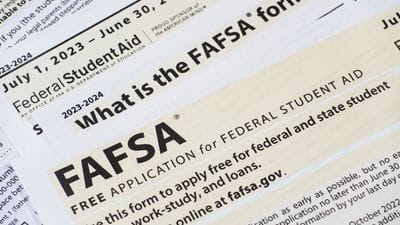
On June 6, 2025, the U.S. Department of Education announced new student identity verification requirements that will take effect this summer, with a broader and more permanent system expected for fall 2025.
This summer’s enhanced identity verification requirement applies to approximately 125,000 first-time FAFSA applicants nationwide who are newly selected by the Department for targeted review based on undisclosed, risk-based indicators. These applicants, traditionally placed in the Department’s “Verification Group V4,” are typically required to verify their identity via notarized documents and submit a signed Statement of Educational Purpose. For this summer cohort—limited to aid recipients who submitted the 2024-25 FAFSA and are seeking disbursements for the summer 2025 term—the Department has waived both the statement and the notarization requirement. Instead, students must now verify their identity by presenting government-issued identification, either in person or via a live video call.
The measures are in response to a surge in financial aid fraud scams targeting open-access institutions, such as California’s community colleges, which have collectively disbursed at least $14 million (and perhaps much more) to fraudsters since 2021.
While education leaders broadly support efforts to safeguard public resources, many worry that these new steps, if not implemented carefully, may create unnecessary barriers to enrollment for legitimate applicants. For example, photo IDs may be unavailable to some students (e.g., undocumented, under‑18, or incarcerated), and students who work during business hours or who lack transportation or internet access may struggle to complete timely verification. The technological, logistical and staffing burdens of live verifications also add complexity.
As the Department works toward a permanent screening model for all FAFSA applicants in fall 2025, stakeholders have voiced that equity and access should remain central to the enrollment process. Some have urged for integrating identity checks earlier in the FAFSA process, possibly through platforms like ID.me or by leveraging tools already in use at the campus level, to prevent impediments at enrollment time. Efforts to automate verification where feasible could reduce undue burden on students and financial aid staff.
Ultimately, community colleges strive to protect program integrity while preserving the open-access mission that serves millions, and urge federal partners to ensure that additional verification is both reasonably necessary and not a barrier to student matriculation.