
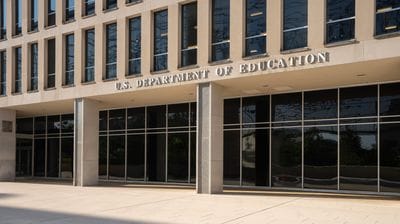
As reported this week in Education Week, the U.S. Department of Education has issued new guidance directing schools not to consider race in developing or implementing student discipline policies and stating that Title VI prohibits intentional discrimination—not policies that merely produce a disparate racial impact. The August 18 Dear Colleague Letter represents a significant shift in federal civil rights enforcement and follows the Department’s recent elimination of longstanding disparate-impact regulations. Under the Department’s current interpretation, schools may adopt and consistently enforce race-neutral discipline policies even when disciplinary outcomes differ among racial groups, but they may not alter disciplinary decisions because of those racial outcomes.
For school leaders, however, the change in federal enforcement policy should not be understood as a reason to stop examining discipline data or asking difficult questions about student outcomes. Disparities can still provide important information about school climate, access to supports, consistency in implementation, and whether similarly situated students are being treated similarly. Moreover, intentional discrimination remains unlawful, and state law and other legal requirements may impose additional obligations. The challenge for districts is therefore to separate using data to identify and address educational or operational concerns from using race itself as a factor in disciplinary decision-making. In this changing legal environment, districts should review discipline policies and practices with counsel while continuing to pursue the broader educational goal that has not changed: maintaining safe, supportive schools in which expectations are clear and discipline is fair, consistent, and focused on student success.
The U.S. Department of Education on Tuesday instructed schools not to take race into account in student discipline policies and said that considering data showing a racially disparate impact of such policies violates federal law.