
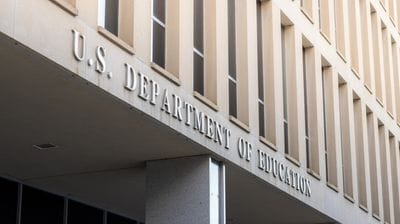
The ongoing discussion about relocating certain federal special education functions outside the U.S. Department of Education discussed in the below-referenced K-12 Dive article raises important operational questions that deserve careful consideration beyond the political debate. Regardless of where these responsibilities ultimately reside, the central legal obligations under the Individuals with Disabilities Education Act (IDEA) remain unchanged. Students with disabilities continue to be entitled to a free appropriate public education, and school districts remain responsible for identifying eligible students, developing appropriate individualized education programs (IEPs), and ensuring meaningful educational benefit. The question is not whether these rights continue to exist—they do—but whether the structure of federal oversight will support consistent guidance, technical assistance, accountability, and implementation across the country.
From my perspective, the greatest challenge for school districts is likely to be maintaining clarity during any period of administrative transition. Special education compliance depends heavily on coordinated federal guidance, consistent monitoring, and timely technical assistance. Any restructuring that creates uncertainty about roles, responsibilities, or interpretation of IDEA has the potential to increase confusion for educators and administrators who are already navigating an increasingly complex legal landscape. Whatever organizational model is ultimately adopted, success should be measured not by which agency administers the law, but by whether students receive consistent services, families experience a transparent process, and school districts have the support they need to faithfully implement IDEA.
For the full article, please see:
Several former Education Department officials, speaking to the summit’s nearly 300 attendees, said the Trump administration’s efforts to shrink the Education Department’s footprint by moving core responsibilities to various federal agencies is causing concerns regarding special education funding, policy, accountability and coordination with other K-12 services.